Saturday, 8 April 2006

A defense of blogs - part 2


In my first post of this three-part series, I considered the possible origins of negative attitudes about blogs.

In this post, I'm going examine the significance of blogging as a form of communication. And what better starting point than Marshall McLuhan? I can't claim to understand much of what he wrote, but his epigrams are wonderfully insightful. Perhaps most famous is his assertion that "the medium is the message." And when it comes to blogs, what is the medium? Well, it's global personal publishing that's easy, interactive, and effectively free. McLuhan is suggesting that we should focus on the medium rather than the content per se. Critics of blogging miss this point, choosing instead to decry the quality of much of the content. Here is how journalist Ron Steinman saw things, writing in June 2004:
"Reputedly, there are more than a million blogs and still counting. It is scary. Truly, who has the time to read, digest, and make sense of all the words spewed forth? I do not. I do not want to try."
Methinks he doth protest too much. Is Steinman perhaps suppressing an obsessive-compulsive urge to clean the filthy stables of the blogosphere? Given that the number of blogs today is estimated to be upwards of 30 million, Hercules himself would be daunted.

Fortunately, nobody need take on such a task. The wonderful thing about blogs is if you don't like them, you don't need to read them! Unlike spam, which is an irritation we could all do without, you can just ignore blogs if that's your preference. You can also ignore books, magazine, television, and movies if you like. Goodness knows, there's lots of trash there too! But most of us reckon that it's possible to separate some of the wheat from the chaff. I don't imagine anyone is entirely successful, but there's lots of good stuff out there, and some good strategies for finding it.

Arguably, the challenge is much greater when in comes to blogs. One solution is to stick to the "A-list" blogs. But I think that's a real mistake, because the message of the blog medium is this: for the first time in human history, an ordinary person can share his or her perspectives, as he or she sees fit, with the rest of the world. A fabulous flowering of creativity and self-expression is taking place; why miss out on it?

It might be argued that blogs are not unique in this respect. Newsgroups, electronic mailing lists and internet forums have many similarities with blogs, and predate blogs by many years. However a key distinguishing feature of blogs is their ownership. Fundamentally, newsgroups, mailing lists, and forums are communities, with all the associated strengths and weaknesses. The invitation is: "come and share as we discuss X". While a community can grow around a blog through the commenting feature, the blog belongs to the owner not the community, and the central focus remains the owner's posts. The invitation is: "check out my posts, and leave comments if you like". In no way is this meant to denigrate the value of the comments. Indeed I find the comments on my blog to be a wonderful source of insight and humour—and at least half the fun. Similarly, when I read other blogs I often check the comments. Among other things, they give a great sense of who's reading (although of course, there may be many readers who remain silent).

Ironically, despite predictions (by McLuhan among others?) that the written word was doomed by the dominance of electronic media like radio, television, and the internet, blogs are heralding a renaissance in writing. The linearity of the printed page was widely dismissed as old-fashioned and boring, allegedly incompatible with the infinitesimal attention span we've all developed. This was always a weak argument, premised on an oversimplified analysis of patterns of media consumption. What is true is that we read blogs differently from how we read a newspaper, or a magazine, or a book. This is partly due to the "post-centric" nature of blogs (an observation attributed to Meg Hourihan). It is also partly a function of hyperlinks. Incidentally, there has been extensive comment on the journalistic value (or lack thereof) of blogs. I don't intend to weigh in on this, except to point out that the use of links in blog posts allows for the attribution of sources and justification of claims—something the print media could sometimes benefit from. For more on the relationship between blogs and journalism, see this article by Steven Johnson.

The internet is widely seen as the realization of McLuhan's "global village". But unlike many villages of old, blogs are making this one profoundly democratic: now it is not only the chief and the high priest whose voices can be heard—we've always been forced to listen to them—instead we can tune in to whomever we like. A. J. Liebling pointed out that "freedom of the press is guaranteed only to those who own one"—well now everyone can own a press. A soapbox for all! (Without the noise pollution.)

By opening up communication, I believe that blogs are helping to bring about a huge increase in intellectual efficiency for humanity. Ideas previously isolated by geography (even on a local scale) and stifled by dominant cultural and political assumptions can now flow freely. Earlier technologies have only hinted at this kind of exchange.

One frequently-heard criticism is that blogs are largely driven by vanity and ego. On the one hand, this is simply a tautology. A person's blog is, after all, a projection of themselves (their ego) onto the internet. On the other hand, this is a psychological claim: bloggers derive personal gratification from expressing themselves. But then this too has a tautological flavour, for why else would they do so? Presumably then, the claim is that there is too much ego and pride (a rather more neutral term than vanity) involved. In the case of a blog that is transparently self-glorifying, the claim is plausible. But regardless, there is always the choice to ignore any given blog, particularly if it offers nothing to the reader. On balance, blog narcissism would seem to be a harmless release. And thanks to professionally-designed blog templates, we don't have to deal with so many hideously ugly vanity pages (actually that one is a parody).

I leave you with some interesting links. As so often, the Wikipedia entry on blogs is excellent, with some interesting history and a list of 20 (!) different types of blogs. Seth Godin has a neat e-book about blogs. Finally, this one is more about newsgroups than blogs, but it's too much fun not to include.

Thursday, 6 April 2006

Evidence-based ambiguity


In the last 15 years, evidence-based medicine has taken the world by storm. According to a famous definition, evidence-based medicine is
"the conscientious, explicit, and judicious use of current best evidence in making decisions about the care of individual patients."
In this spirit, the evidence supporting many time-honoured practices in medicine has been examined, and in a number of cases found wanting. (For an informative and entertaining look at this, see this slide presentation by former British Medical Journal editor Richard Smith.) The exalted status that expert opinion once enjoyed is waning. Today the cry is "Show me the evidence!" (cf. Jerry Maguire.)

If you'll pardon the pun, the success of evidence-based medicine has been infectious. The prefix "evidence-based" is popping up not just in connection with healthcare: today there is evidence-based education, evidence-based software-engineering, evidence-based librarianship, and the list goes on. The "evidence-based movement" seems victorious.

But there are stirrings of discontent. From the beginning, evidence-based medicine has had its critics. (See this editorial for a balanced account of their objections.) A key issue relates to the ambiguity in the word "evidence". If it means empirical evidence, it would seem that clinical experience, pathophysiological theory, patient values, and expert opinion have no role to play. Alternatively, evidence can be defined broadly: "evidence is anything that establishes a fact or gives reason for believing something" (The Oxford American Dictionary, via this report). But this "colloquial" definition opens the doors so wide as to be useless here. For example, a religious argument might be compelling for the believer, but surely would not constitute "evidence" for the present purposes. For some other interesting perspectives on the definition of evidence in evidence-based medicine, see this essay by Amanda Fullan (an undergraduate student at the time).

In recent years the evidence-based movement has expanded to areas such as public health and policy. In a 2004 essay titled What is Evidence and What is the Problem?, the Acting Executive Director of the American Psychological Association writes
"These days, you can hear the terms “good science”, “evidence”, and “data” a lot in Washington. One of the catch phrases around policy-making circles is “evidence-based”, applied to a host of contents including education, policy, practice, medicine, even architecture. You would think that this would make us all quite happy – at least those who advocate that decisions about policy, social interventions, and future directions be based on data. But, ironically, the new emphasis on evidence-based this and that has been simultaneously welcomed and greeted with raised anxiety levels and red flags of concern."
And the ambiguity of the word "evidence" is even more problematic in this context:
"It is clear that discussions of definitions of evidence, distinctions among kinds of evidence (including scientific data, expert judgment, observation, and theory), and consensus on when to use what, will occupy us for some time."
The Canadian Health Services Research Foundation (CHSRF) has recently grappled with these issues, issuing a report, and holding a workshop. One of the "key messages" from the workshop was that
"Although the literature shows that decision makers work with a colloquial understanding of evidence (often alongside a scientific understanding), some participants felt strongly that the information classified as colloquial evidence should not be called evidence. They acknowledged the importance of this information but suggested finding a substitute term, such as “colloquial knowledge” or “colloquial factors.”"
Finally, the CHSRF adopted the following (rather extended) definition:
"Evidence is information that comes closest to the facts of a matter. The form it takes depends on context. The findings of high-quality, methodologically appropriate research are the most accurate evidence. Because research is often incomplete and sometimes contradictory or unavailable, other kinds of information are necessary supplements to or stand-ins for research. The evidence base for a decision is the multiple forms of evidence combined to balance rigour with expedience—while privileging the former over the latter."
Hmmm ... not entirely convincing, but I see what they're getting at. But where did they get that stuff about coming "closest to the facts of the matter"? I'd say it's either begging the question or using a circular argument.

Epilogue: In their latest newsletter, the CHSRF announce that they've decided to abandon the term "evidence-based":
"Following feedback and discussions at the “Weighing Up the Evidence” workshop in September 2005, the mission of the foundation has been changed to better reflect the emerging realization that research is justifiably only one, albeit very important, input to decision-making."
The new term? Evidence-informed.

Wednesday, 29 March 2006

Canada should pull its troops out of Afghanistan


Today a Canadian soldier was killed in Afghanistan. That makes 11 since 2002.

For the record, I opposed Canada's involvement in the 2001 invasion of Afghanistan. I didn't question the brutality of the Taliban regime, nor that they provided a haven for Al Qaeda. But I wasn't convinced at the time that invading the country was the best way to improve matters. The events that ensued haven't altered my opinion. Did the invasion improve life for Afghanis? Did it stabilize the region? Did it stop al-Qaeda?

What is clear is that a lot of innocent Afghanis were maimed or killed, Osama bin Laden is still at large, and the Taliban remain a force to be reckoned with. Hundreds of "enemy combatants" were shipped off to Guantánamo Bay where, according to Amnesty International, many
"... remain held in a legal black hole ... many without access to any court, legal counsel or family visits. Denied their rights under international law and held in conditions which may amount to cruel, inhuman or degrading treatment, the detainees face severe psychological distress. There have been numerous suicide attempts."
A recent Globe and Mail story quotes NDP defence spokesman Bill Blaikie as saying "Canada's silence on Guantanamo is related to the fact that we are complicit in the whole process".

Many Canadians cherish our role as peacekeepers, but it's quite evident that "peacekeeping" doesn't really describe the Canadian military role in Afghanistan. What should our role be? I'd say that's a question for the Afghani people to answer. In the mean time, we can do more good by providing financial, technical, and moral support.

Cursed by its strategic location, Afghanistan has been repeatedly invaded over the years. Foreigners seem intent on butting in. Could it be that we're the problem?

Monday, 27 March 2006

A defense of blogs - part 1

Back in January, I commented on a newspaper article that took shots at both blogs ("high on opinion and low on fact") and readers of blogs ("getting only the 'daily me'"). In fact negative attitudes about blogs are quite widespread. What's more, predictions are often made that the "fad" of blogging will soon pass.

I'm planning to look at this in three posts. In this one, I'll explore what might be behind these negative attitudes. My second post will defend the blog as a form of communication. And in my third post, I'll try my hand at predicting what the future holds for blogging.

Dissing blogs

The blog of stereotype is truly a thing to be scorned: an online diary packed with inane details of the blogger's life together with uninformed rants—an exhibitionistic ego trip. Admittedly there are plenty of blogs like that. But there are lots of trashy books and magazines and nobody feels the urge to dismiss all books and magazines.

Where does the bad rap come from? I don't think there's a single answer, but here are a few contenders. A straightforward explanation is the Google effect: when people search for information on the Internet, increasingly they are stumbling onto blogs, and often stupid ones at that. An irritating distraction like this is unlikely to leave someone with a good impression of blogs. You can understand this reaction, but it's hardly a sensible way to judge the worth of the whole blogosphere.

A relatively subtle explanation may relate to the difficulty of adequately describing to someone just what a blog is. If you say "It's kind of like an online diary" (a quick but clearly inadequate description), it may perpetuate the notion that blogging is something only an exhibitionist would do.

But I think an authoritarian impulse lurks behind some of the criticism of blogging. Blogs let anyone express their opinions, not just the chosen few. Bloggers don't have to spout opinions that'll please the boss, the advertisers, the market, or the government. Bloggers don't have to express the consensus opinion, or bow to the prevailing fashions. And that makes them a threat.

This is not the first occasion when a new form of communication has threatened the status quo. The introduction of the printing press ushered in the era of mass communication. The revolutionary consequences were soon felt, not the least with the widespread printing of political pamphlets. No longer did the crown and the church have a monopoly on political expression.

Whenever democracy is ascendant, an authoritarian response is not far behind. This is as true today as it was hundreds of years ago. In China, old-fashioned methods are favoured: dissident voices are simply silenced. In the West, there is no need for such a blunt approach. Authoritarian impulses take a more subtle form. Blogs are denounced as frivolous displays of vanity, offering only drivel or perhaps third-rate analysis. Blogs are just a passing fashion, a bandwagon that will soon crest the hill. But perhaps the true offense is something else: the officially sanctioned organs of mass communication have been bypassed, and (gasp!) they might eventually be displaced altogether.

Noam Chomsky has discussed what he calls "the crisis of democracy" (after the title of a report by the Trilateral Commission), namely the perception by elites that there is too much democratization, and I wonder if we're not witnessing something similar. This kind of argument is often dismissed as conspiracy theory, but it's nothing of the sort. I'm not supposing there's a cabal secretly meeting to plan the downfall of blogs (though it would make a great movie). Thought control in our society doesn't require such exotic methods: the threat is far more effectively neutralized by ridicule and marginalization. A few popular mainstream blogs are given the official blessing, and the rest are written off as juvenile nonsense.

Respect for authority and the urge to conform is sufficiently ingrained in our society that a few respected "opinion leaders" can often set the tempo for the rest. Just as the top dogs in the fashion world dictate which colours we should wear this year, a relatively small number of cultural and political sources provide clear guidance on how we should see the world. The last thing they want is to see their influence diluted.

Saturday, 25 March 2006

I don't CRUNCH numbers!

As a statistician, I'm sometimes asked to "crunch the numbers". Now, I don't mean to sound sensitive, but I don't ... ahem ... "crunch" numbers. The onomatopoeic word CRUNCH suggests roughness, the application of brute force, perhaps in the form of raw computing power.

If you've seen the movie The Horse Whisperer, you'll remember how the character played by Robert Redford worked with horses. Instead of trying to "break" them, he tried to understand them and work with them. Maybe you can see where I'm going with this ...

A good data analysis requires care, patience, and understanding. It's a collaborative endeavour that should make use of subject-area knowledge wherever possible. Every number has a story to tell, and that story is not always immediately apparent. What did the researcher want to measure? How did they measure it? How did the measurement get turned into a number in a data set? And that's only the beginning, because a typical data set is the product of numerous different measurements, perhaps made on several occasions. Once the pedigree and provenance of each variable in a data set have been determined, the picture they form can be brought into focus, and the underlying patterns can be explored. Sensitivity is paramount: Are the modeling assumptions appropriate? Is something being overlooked? Would a different approach provide more relevant insights?

It seems that the term "crunching the numbers" is most commonly used to refers to what accountants do, and on this I can't comment. But for statistical data analysis, the metaphor is all wrong.

Mind matters: or mind boggling mind blogging

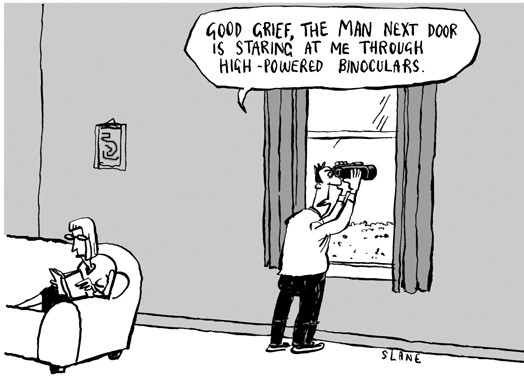
I just got back from a trip to the San Francisco Bay area. To the left is a photo of a T-shirt I bought at The Tech Museum of Innovation in San Jose (which is well worth a visit, by the way). Various family members have opined that it's just too geeky to wear in public, but what do I care? It certainly encapsulates some of my recent thoughts about consciousness (together with humour, one of the mind's stranger characteristics).

I just finished reading Mind : A Brief Introduction by John Searle, which is a fairly accessible work on the philosophy of mind. It seems that some people believe that scientific study of the workings of the brain will eventually reveal all the secrets of the mind. Even if that were true, we're obviously a long way from a good understanding of the brain. On this point, here's a quotation my mother pointed me to:
If the human brain were so simple
That we could understand it,
We would be so simple
That we couldn't.

- Emerson M. Pugh (as quoted by George E. Pugh, Emerson's son in G.E. Pugh, The Biological Origin of Human Values, 1977, p. 154)
Hmmm ... not sure I agree, but maybe there's something to it.

In any case, the brain and the mind are not the same thing. I think I'm probably quoting John Searle in saying that "The mind is what the brain does." Understanding how the brain works, through the methods of neurophysiology and cognitive science, can inform our understanding of the mind, but the scientific method only goes so far.

The mind is certainly not unique in this respect. For example, science may inform an understanding of music (through the physics of sound, our auditory system, and the brain's response to music), but there is more to music—and likewise other aesthetic experiences—than science. Likewise, science may inform an understanding of ethics (through evolutionary biology), but surely notions of right and wrong go beyond biology. My point here is that many of the things that concern us (and I haven't even touched language, literature, culture, or politics) are not entirely—or perhaps not even primarily—matters of science.

Incidentally, mathematics seems to me the clearest example of something to which the scientific method has no application. Mathematics proceeds not by empirical observation but by deductive reasoning. Of course, as a scientist, I place enormous value on the scientific method, but I don't think that reality is exclusively physical.

Ultimately, what puzzles me most is this: how is it that matter can develop the ability to contemplate itself? To me, this is a fundamental mystery.

Searle explores a number of other mind-boggling mind questions, concerning things like free will and the self. And here's one for the A.I. researchers: Could we create robots who would behave just like humans, but with no mental life at all? Or does consciousness click in at some point? Is free will the key issue?

Finally, here's a link to a piece by Nicholas Humphrey, a theoretical psychologist who has worked on the evolution of human intelligence and consciousness, along with comments from a bunch of people including Daniel Dennett.

I'd be delighted to hear other people's thoughts on this subject ... or should I say, I wouldn't mind hearing what you have to say?

Thursday, 2 March 2006

Privacy policies


Everywhere you go these days—online and off—there are privacy policies. I presume most of these are boilerplate. It would be nice if there were some standards. Then instead of having to wade through a page of legalese, you might only have to read one or two lines: "We follow privacy standard XYZ except in the following respects ...".

In spite of their verbosity, privacy policies seem like a good thing. I want to know that my private information is kept as private as possible. I don't want my contact details shared with marketers, let alone more personal stuff. It's good to have the rules spelled out in black and white. But let's not kid ourselves: the important stuff is never written down (a piece of wisdom that was imparted to me several years ago, and that I keep returning to).

Now, in a recent post, I noted that even the NSA has a privacy policy (the word ironic seems pathetically inadequate). Which brings me to my point. Intelligence agencies, by their very nature, are the enemies of privacy. But not only do they covertly obtain private information, they have a nasty habit of sharing it with their friends. Consider the infamous case of Maher Arar, a Canadian citizen who suffered an "extraordinary rendition" to Syria, where he was imprisoned and tortured. All kinds of information apparently changed hands between the intelligence agencies of Canada, the U.S., and Syria. Well apparently this wasn't an isolated case: at least three other Canadians
"... were also all detained by the same branch of the Syrian military intelligence where they were interrogated and brutally tortured before eventually being released. None were ever charged with any crime. All of these men say their interrogations were based on information that they believe could only have originated with Canadian investigators."
The quote is from Amnesty International, who is hosting an open letter to the Prime Minister of Canada calling for
"... the government of Canada to launch a fair, independent, comprehensive and public review of the possibility of Canadian complicity in the detention, interrogation and torture of Muayyed Nureddin, Abdullah Almalki and Ahmed Abou El-Maati"
I encourage you to add your name to the petition.